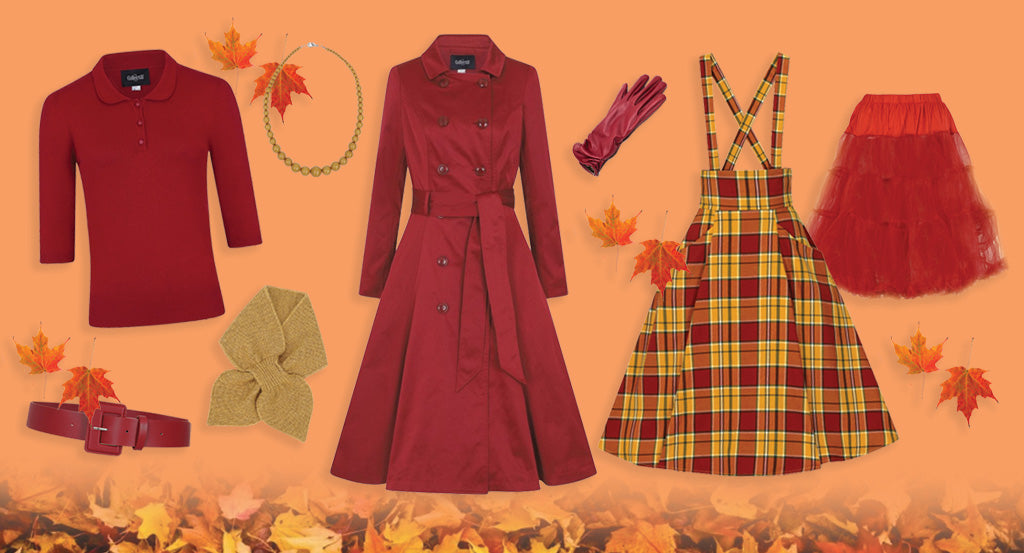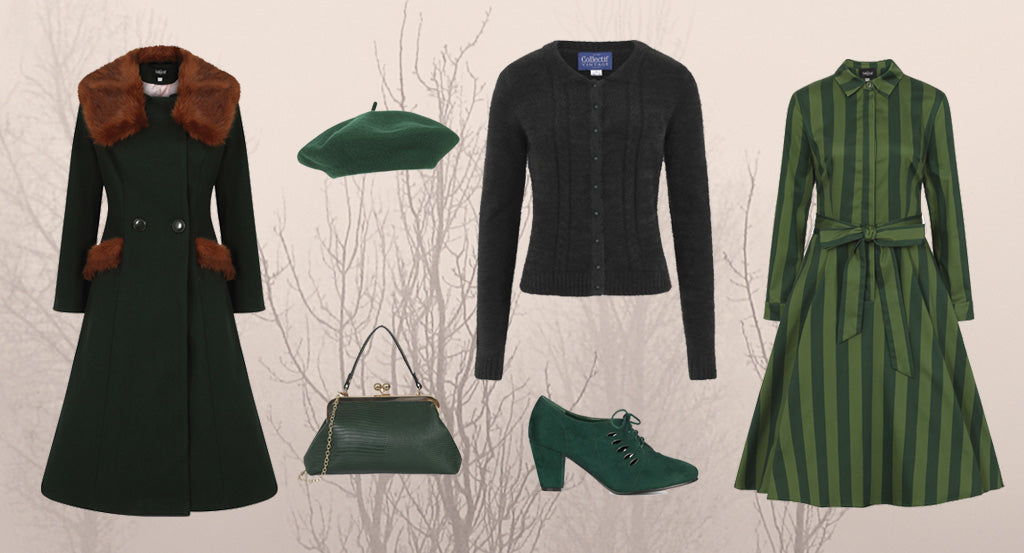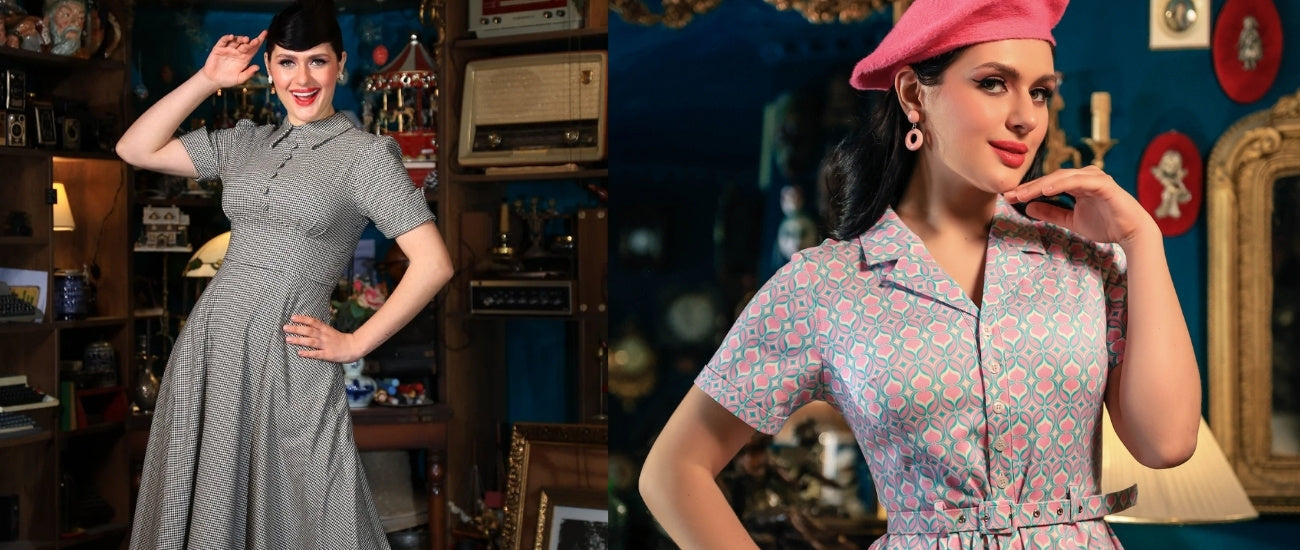
The best style lessons from the 1940s and 1950s are not about recreating period costume. They are design principles — defined waist, structural fit, bold print identity, capsule thinking — that solved real dressing problems and still do. Applied selectively to a modern wardrobe, these mid-century principles produce clothes that hold their shape, work across occasions, and flatter a far wider range of bodies than most current high-street fashion.
TL;DR
- Structured garments from the 1940s and 1950s used darts, seams, and boning to create shape, not stretch. That construction logic, championed by brands like Collectif London, still outperforms elastane-dependent modern fashion for longevity and fit.
- A defined waist is a proportion tool, not a size requirement. The defined waist was the single constant across both the 1940s and 1950s, and high-waisted cuts work on every body type.
- 1950s novelty prints were bespoke by design. One well-chosen statement print, like Collectif's in-house designs, outperforms five plain basics.
- The 1940s capsule wardrobe, built under fabric rationing, is the most practical modern wardrobe philosophy available.
Lesson 1 — Fit Starts With Structure, Not Stretch
Structured garments from the 1940s and 1950s create their silhouette through darts, princess seams, boning, and internal stays, not through fabric tension. A properly fitted 1950s style bodice does not cling; it holds a deliberate shape that your body fills. That difference is visible all day: structured garments stay in line, while stretch-dependent pieces sag and lose their shape within hours.
Modern fashion has a stretch dependency most wearers do not notice until they try the alternative. High-street elastane-heavy garments fit in the sense that they pull over the body, but they rarely shape intentionally. The mid-century approach was the reverse: build the shape in, then let the body fill it. 1940s style achieved this through pattern-making precision, not fabric give, and the fit and structure that resulted is still the benchmark for any garment that needs to look deliberate across a long day.
This does not mean abandoning stretch entirely. The best modern reproduction brands combine both approaches. Collectif uses contemporary fabric blends (cotton-elastane, viscose mixes) that add comfort without replacing the underlying structural logic. A darted bodice in a cotton-blend fabric moves like the 2020s but holds its line like the 1950s.
The practical check when buying: look for construction terms on the product page — see our full evaluation checklist for what to look for. "Darted," "lined," "boned," or "interfaced" indicate someone built shape into the garment. "Stretch fit" or "body-con" indicates the fabric is doing all the work. Neither is wrong for every purpose, but knowing the difference helps you choose with intention.
1940s silhouettes, fabrics, and tailored construction details
The dominant 1940s silhouettes were the square-shouldered utility suit (padded shoulders, nipped waist, knee-length A-line or pencil skirt) and the day dress with a fitted bodice and either a full or straight skirt. Fabric rationing under the UK CC41 utility scheme limited yardage, which meant construction had to be precise: every dart and seam worked harder because there was less fabric to work with. Typical fabrics were wool crepe, cotton, rayon, and lightweight jersey. Construction details that defined the era include darted bodices, waist seams, princess-line panelling, and cap sleeves. Vivien of Holloway and Collectif both reproduce these construction specifics rather than just referencing the aesthetic.
Lesson 2 — Your Waist Is the Anchor of Every Outfit
The defined waist was the single constant across both the 1940s and 1950s, present whether the silhouette was a squared-shoulder wartime suit or a full New Look swing dress. Defining the waist is a proportion technique, not a body-size requirement. It creates a clear visual break between the upper and lower body that makes shoulders look balanced, hips look outlined, and the overall silhouette look considered rather than accidental.
The modern wardrobe has largely abandoned this. Drop-waist dresses, oversized tops worn untucked, and mid-rise trousers blur the waistline. That can read as deliberately relaxed. But understanding the defined-waist principle gives you a tool to deploy when you want your silhouette to read as intentional rather than casual.
High-waisted cuts are the simplest application. The Marianna Navy Stripe Swing Skirt from Collectif sits at the natural waist, right above the hip bone, and creates the same waist-anchored proportion that worked in 1952 without requiring a belt or corset. Pair it with a tucked-in blouse or the Lynn Striped Knitted Top and the proportion is set. Other options at a similar construction level include Lady V London for stretch-jersey versions that hit the same waist point with more give.
The lesson is not that you must always cinch your waist. It is that knowing where your natural waist sits, and choosing when to define it, is one of the most reliable silhouette tools mid-century fashion developed.
Lesson 3 — One Statement Print Beats Five Plain Basics
The 1950s novelty print tradition emerged as a deliberate reaction to wartime austerity. After years of restricted dyes and muted utility cloth, post-war fashion exploded into bespoke prints: cherries, tropical birds, polka dots, geometric abstracts, conversation-piece motifs. A garment's print became its identity, recognisable and individual, impossible to confuse with a chain-store copy.
That instinct holds. A single piece in a well-designed, original print carries more wardrobe impact than a drawer full of plain basics. It becomes the piece that gets noticed, the piece people remember, the anchor of an outfit even when everything else is simple.
The critical word is "original." Stock prints (the same generic florals appearing on thirty different brands) do not carry the same weight as prints designed specifically for a label. The 1950s fashion houses that built their identity on print understood this: a bespoke print functions like a signature without needing a visible logo.
Collectif follows this directly. All textile prints are designed in-house, with no stock fabric libraries. Every cherry motif, every geometric, every tropical pattern is original to the brand. The swing dress collection shows the range: prints distinct enough to be identifiable at a glance, built on classic 1950s silhouettes. It is the same logic that made a mid-century print dress instantly attributable to its maker. Beyond Retro and TopVintage carry curated original vintage and reproduction pieces for shoppers who want verified period prints rather than new production.
Lesson 4 — Buy Fewer Pieces That Work Harder
The 1940s capsule wardrobe was invented under fabric rationing, not lifestyle aspiration. Most British women during the war operated with five to seven core garments at a time, each required to work across multiple occasions by swapping accessories, layers, and context. A tailored suit could go from the office to a restaurant to a Sunday gathering by changing the blouse and hat. Versatility was not optional; it was a condition of having a wardrobe at all.
The thinking behind this is worth applying now. Rather than a collection of unrelated individual items, the mid-century wardrobe was a system: each piece had to work with at least three others. If it did not, it was not worth the limited clothing coupons.
Separates are how this principle works in practice. A well-cut vintage-style skirt pairs with multiple tops across seasons. A fitted knit cardigan layers over dresses and blouses. The Posey Heritage Check Pencil Skirt pairs with the Lynn Striped Knitted Top, with a plain blouse, and with a structured jacket for three distinct registers — and three skirt silhouettes can produce five completely different looks when the pieces are chosen with this system in mind. Collectif's approach to separates (prints and solids that coordinate across the range) is explicitly designed for mix-and-match building rather than one-off statement pieces. Lindy Bop offers accessible entry-level separates on the same principle for shoppers building a first capsule on a tighter budget.
Lesson 5 — Occasion Dressing Does Not Require a Whole New Wardrobe
The 1950s shirtwaist dress was the most versatile garment of its decade: it could run errands in the morning, dress for lunch with friends, and read as polished enough for an evening out with the right shoes and jewellery. One dress, three occasions. The mid-century principle was to build garments well-made enough and well-cut enough to cross occasions through accessories, shoes, and layering, not by owning a separate outfit for every context.
Modern fashion has moved in the opposite direction. "Work outfits," "date-night outfits," "wedding guest outfits" are marketed as distinct categories, each requiring entirely separate clothing. The cost and wardrobe congestion this creates is real.
The Florence Side Button Skirt is a practical example of the mid-century principle applied now. Its 1940s-inspired A-line shape and side-button detailing reads as considered enough for a garden party with a bright top, relaxed enough for a weekend with a striped knit, and professional enough for a creative office with a tucked-in blouse. The reason it crosses occasions is the same reason the 1950s shirtwaist did: the silhouette is classic enough to read appropriate in different settings, and the construction is good enough that it does not look casual when you need it to look polished. House of Foxy produces similar A-line separates with the same occasion-spanning logic.
Lesson 6 — Inclusive Fit Was the Original Design Philosophy
Mid-century patterns were designed around curves (bust, waist, hip) using darts, seams, and structural elements to accommodate the body's natural shape rather than expecting a straight-cut garment to fit by default. This is why many women with hourglass or curvy figures find vintage-inspired clothing more immediately flattering than modern high-street fashion, which typically grades from a relatively straight silhouette. The same construction principles that work for classic hourglass proportions also address plus-size vintage dressing by building shape into the garment rather than scaling it up as a uniform tent.
The 1940s–1950s pattern-making tradition took bust-to-waist and waist-to-hip ratios seriously and built construction techniques to match them. That is not nostalgia; it is functional design.
Collectif carries this forward with patterns graded across UK 6–22 and fit-tested at multiple size points, meaning dart placement, ease, and skirt fullness are adjusted per size rather than linearly scaled from a single sample. Hell Bunny extends to 5XL on the same inclusive principle. The extended sizing collection at Collectif covers the fuller end of the range with the same construction standard applied throughout.
The broader point: if modern clothing does not fit well, the problem is often the pattern-making, not the body. Mid-century construction was designed to work with diverse figures in the first place.
Frequently Asked Questions
What silhouettes, fabrics, and tailored details were most popular in 1940s vintage fashion?
The defining 1940s shapes were the square-shouldered utility suit and the fitted day dress with an A-line or pencil skirt, both built on darts, waist seams, and princess-line panelling. Fabrics ran to wool crepe, cotton, and rayon; construction details like cap sleeves and darted bodices are the clearest markers of the era. The CC41 utility scheme limited yardage, so craftsmanship per metre was high.
How can I better style 1950s vintage-inspired clothing and overall look?
Styling 1950s-inspired fashion is about mastering structural principles rather than assembling a period costume. For womenswear, the foundation of the 1950s look is the defined waist. Start by prioritizing construction: look for garments that utilize darts, princess seams, or internal boning rather than relying solely on stretch fabrics. Whether you are wearing a full swing skirt or a pencil skirt, the garment should sit at your natural waistline to create a visual break that balances your proportions. If you are focusing on the full silhouette for an event, adding a fluffy vintage-style petticoat under a swing dress is the most efficient way to achieve the quintessential fit-and-flare volume seen in mid-century cinema.
To modernize your look without looking like you are wearing a costume, adopt a "mix and match" strategy. Blend one structured 1950s piece with contemporary, clean-lined essentials. Pair a voluminous swing skirt with a sleek, minimalist modern white T-shirt, a leather jacket, or a fitted contemporary sweater. Choose modern footwear—such as current flats, flatforms, or simple pumps—and a minimalist handbag. Brands like Collectif London are excellent starting points because they incorporate 1950s structural logic into modern fabric blends, offering the authentic look of vintage pieces with contemporary comfort. For your beauty routine, focus on the classic trio: winged eyeliner, defined brows, and a matte red lip. You do not need to commit to elaborate victory rolls; balancing these elements with a modern approach to hair volume keeps the style fresh.
For 1950s-inspired menswear, the key is moving away from the "slim-fit" dominance of current fashion in favor of wider, more intentional cuts. High-waisted trousers are the single most impactful item you can add to your wardrobe to capture the mid-century aesthetic, pairing effortlessly with a camp-collar shirt. For a casual rebel look popularized by James Dean and Marlon Brando, opt for a clean, dark-wash pair of jeans with a generous cuff at the hem, paired with a crisp white t-shirt and penny loafers or high-top canvas sneakers.
What are the most recognizable fashion elements of the 1940s, and which modern brands reproduce them best?
The 1940s aesthetic is defined by a marriage of structural economy and precise tailoring, a direct result of fabric rationing during World War II. Across the fashion history timeline, the early-to-mid 1940s relied heavily on military-inspired utility, which transitioned by 1947 toward post-war feminine silhouettes. Often highlighted in museum overviews of wartime fashion, the most recognizable fashion elements include structured padded shoulders, a sharply defined waist, puff sleeves, gathered busts, V-shaped necklines, and a dart-fitted bodice that creates shape through internal engineering rather than stretch. Skirts typically fell into a disciplined A-line or sleek pencil silhouette.
Modern UK brands that reproduce these authentic 1940s construction techniques best include Collectif London (Collectif 1940s), which bridges vintage authenticity with everyday wearability by using contemporary cotton-elastane blends while maintaining the era's structural logic (darts, princess seams, sizing UK 6–22). Collectif's collections are ideal for those who want an authentic look that functions comfortably in a modern wardrobe. Other leading reproduction brands include Vivien of Holloway for UK-made premium non-stretch reproductions prioritizing historical fidelity, House of Foxy for high-quality 1920s–1960s tailored separates manufactured in the UK/Europe, and Miss Candyfloss or Unique Vintage for period-accurate swing dresses and utility suits. For those who want a softer "vintage-inspired" aesthetic rather than strict reproduction, brands like ModCloth and Bernie Dexter offer accessible silhouettes.
Which fashion decades, particularly the 40s, 50s, and 60s, most influence vintage-looking clothing today?
The 1950s has the broadest current influence, driven by the swing dress and pencil skirt silhouettes, which translate cleanly into modern everyday wear. The 1940s contributes structural tailoring (darted suits, A-line skirts, structured shoulders) that has fed into the workwear revival. The 1960s mod shift and colour-blocking remain strong in print and silhouette language. All three decades are currently in production at UK labels: Collectif covers all three, while Lady V London focuses on 1950s–1960s stretch-jersey interpretations.
What are the most popular vintage-inspired fashion trends happening right now in London boutiques?
As of 2026, London vintage-inspired retail has a strong pull toward 1950s swing silhouettes in bold novelty prints, 1940s-influenced structured separates (tailored blouses, A-line midi skirts), and 1960s-adjacent colour-blocking. Bespoke in-house prints, rather than stock florals, are a visible differentiator at the top end of the market. Collectif's Camden-rooted 1950s collection and 1940s collection sit at the centre of this. Beyond Retro represents the true vintage dealer end of the same market.
What are the key characteristics of popular vintage fashion styles from the 1940s, 1950s, and 1960s?
The 1940s is defined by utility-influenced tailoring: structured shoulders, dart-fitted waists, A-line and pencil skirts in wool and cotton. The 1950s pivots to femininity: full swing skirts, hourglass bodices, novelty prints, and the pencil silhouette. The 1960s introduces the shift dress, mod geometric prints, and shorter hemlines. Across all three decades the through-line is construction quality; each era used internal structure (darts, boning, lining) rather than stretch fabric to create its silhouette.
How do different decades, from 1940s wartime to 1960s mod, influence vintage-inspired fashion trends?
Each decade contributes a distinct design logic. The 1940s teaches structural economy: precise construction compensates for limited fabric. The 1950s teaches proportion dressing: the defined waist as the anchor of every silhouette. The 1960s teaches graphic simplicity: bold shape and print without complex construction. Contemporary vintage-inspired brands draw from all three in different proportions — Collectif's range runs across the 1940s, 1950s, and 1960s collections with construction specific to each era's logic.
What specific fashion decades mostly inspire today's UK vintage-inspired clothing wear?
The 1950s is the dominant reference point in UK vintage-inspired fashion, largely because its key silhouettes (the swing dress and the pencil skirt) are versatile enough for everyday wear without reading as costume. The 1940s follows, with its structured separates feeding the contemporary interest in quality tailoring. The 1960s contributes strongly to print direction. UK-based labels including Collectif, Vivien of Holloway, Lady V London, and Lindy Bop each draw from these decades in different proportions, giving buyers access to a range from museum-quality reproduction to accessible everyday wear.
Are 1940s and 1950s style rules still relevant in 2026?
The era-specific rules (matching hats and gloves, never leaving the house without lipstick) are cultural artefacts. The construction principles (defined waists, structural bodices, versatile separates, bold prints as identity) are design fundamentals that solve problems modern fashion still has. They apply regardless of decade.
Do I need to dress head-to-toe vintage to use these lessons?
No. The most practical approach applies one or two principles at a time: a defined waist via a high-waisted skirt, one statement print mixed with modern basics, a structured jacket instead of an unlined fast-fashion blazer. For guidance on which vintage decades are having the strongest moment in 2026, the current trend picture makes it easy to choose which era to draw from. These lessons work best integrated into a modern wardrobe, not used as a complete period costume.
Which body types benefit most from mid-century silhouettes?
Mid-century silhouettes were built around curves, so hourglass and pear shapes often find them immediately flattering. But construction-based shaping (darting, skirt fullness, waist seams) also works for straight or athletic builds by creating proportion through structure rather than relying on the body's existing curves. The key is how well the garment is graded across sizes, not the body type wearing it.
Which UK brands make the best vintage-inspired clothing for everyday wear?
The UK fashion scene is home to a wealth of brands that masterfully blend historical silhouettes with contemporary wearability. Whether you are looking for authentic mid-century structure or a modern interpretation of vintage aesthetics, these brands offer distinct approaches to everyday retro style.
For Authentic Mid-Century Construction
If your priority is period-accurate tailoring, Collectif London is the gold standard. They distinguish themselves by using mid-century structural techniques—such as darts, princess seams, and boning—while integrating modern cotton-elastane blends for everyday comfort. Their range covers the 1940s, 1950s, and 1960s, offering everything from swing dresses to tailored separates in original, in-house designed novelty prints graded inclusively across UK 6–22.
Vivien of Holloway is another essential choice for those seeking strict historical fidelity, offering premium, UK-made reproductions that eschew stretch fabrics in favor of traditional tailoring methods. For those leaning into rockabilly and pin-up aesthetics, Hell Bunny provides well-constructed, vintage-inspired pieces with an inclusive size range that extends up to 5XL. If you are building a collection on a tighter budget, Dolly & Dotty is highly regarded for its well-constructed, accessible 1950s-style dresses, while House of Foxy creates high-quality, tailored separates influenced by the 1920s through the 1970s, manufactured in the UK .
For Modern Interpretations of Vintage Style
If you prefer a contemporary wardrobe that incorporates vintage charm rather than strict reproduction, several British brands excel:
- Boden: Renowned for its "timeless" quality, this brand is perfect for daily wear. It excels at heritage-inspired details like Breton stripes, tartan checks, and vibrant, playful prints that feel fresh yet classic.
- RIXO: Best known for its personality-packed, vintage-inspired prints, this brand focuses on flirty, feminine silhouettes that draw heavily on 1970s archival aesthetics.
- Toast: This brand is ideal for a "slow fashion" approach, focusing on organic materials, fuss-free longevity, and minimalist, relaxed silhouettes.
- Nobody’s Child: A go-to for affordable and trend-led vintage aesthetics, this brand has gained a massive following for its signature puff-sleeve midi dresses made from sustainable materials.
- Queens of Archive: Fusing vintage glamour with a contemporary edge, this brand is inspired by the freedom of the late 1960s and 1970s, crafting limited-edition blouses and dresses featuring metallic finishes and soft gathers.
- Barbour: While primarily a heritage outerwear brand, their iconic waxed and quilted jackets are essential for a vintage-inspired British wardrobe, offering unmatched durability and timeless looks.
When deciding between these options, consider your need for structure: brands like Collectif London and Vivien of Holloway offer the internal engineering (darts, linings, and seams) necessary for an authentic period silhouette. Conversely, brands like Boden, Nobody’s Child, and Toast offer a more relaxed, modern fit that integrates seamlessly into a contemporary, everyday lifestyle.